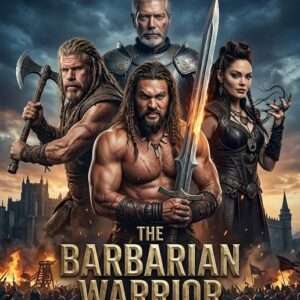
Rise of the Conqueror 2: Blood and Iron (2026) expands the scale and intensity of its predecessor, delivering a grim, violent, and emotionally charged historical war epic. Set in a fractured empire torn apart by endless conflict, the film explores ambition, loyalty, betrayal, and the devastating cost of conquest.
The story follows the rise of a hardened warlord who has now fully embraced his role as a conqueror. As rival kingdoms unite against him, the battlefield becomes a brutal stage where strategy, brutality, and survival collide. Unlike the first installment, this sequel leans heavily into political intrigue and the psychological transformation of its main character, showing how power slowly corrodes morality.

One of the film’s greatest strengths is its large-scale battle sequences. The war scenes are intense, chaotic, and visually impressive, featuring massive armies, siege warfare, and close-quarters combat that feels raw and unfiltered. The choreography emphasizes realism, with every clash feeling heavy and consequential rather than stylized or heroic.
The lead performance is particularly compelling, portraying a complex character who shifts between visionary leadership and ruthless destruction. His descent into moral ambiguity becomes the emotional core of the film, making the audience question whether he is shaping history or being consumed by it. Supporting characters also add depth, especially those torn between loyalty and survival.
Visually, Blood and Iron is dark and atmospheric. The cinematography uses muted colors, harsh lighting, and vast battlefield landscapes to emphasize the harshness of the world. The production design effectively captures the feeling of a collapsing empire, with ruined cities, burned villages, and heavily fortified strongholds.

The film’s score enhances its epic tone, combining heavy percussion with somber orchestral themes that underline both the scale of war and the emotional weight of loss. The pacing is deliberate, allowing tension to build before erupting into large and often devastating battle sequences.
While the movie occasionally slows down during political dialogue-heavy scenes, these moments add important context and deepen the story’s complexity. However, viewers expecting constant action may find the pacing uneven at times.
Overall, Rise of the Conqueror 2: Blood and Iron (2026) is a powerful and brutal war epic that successfully expands its world while delivering emotionally charged storytelling and spectacular battle sequences. With strong performances, a dark tone, and a focus on the human cost of ambition, the film stands as a gripping continuation of a rising historical saga.